
When to Get a Math Tutor for Your Child: Signs to Look Out For
Mathematics is a crucial subject that is taught right from the early stages of a child’s academic journey. However, not all children can grasp the concepts and excel in math without additional help. Every child learns at their own pace, and some may require extra support to keep up with their peers. This is where the role of a math tutor comes in. In this article, we will discuss some common signs that indicate your child may need a math tutor. Identifying these signs early on can help your child receive the necessary support they need to succeed in math and eventually in other academic areas.
1 – Slipping Grades
One of the most obvious signs that your child may need a math tutor is if their grades start to slip. If your child was previously doing well in math and suddenly starts to receive lower grades or is struggling to keep up with their class, it is a clear indication that they require additional support. A math tutor can help identify the areas where your child is struggling and work with them to improve their understanding of the subject.
2 – Lack of Confidence in Math
Another sign that your child may need a math tutor is if they lack confidence in their ability to do math. If your child expresses frustration or a lack of self-confidence when it comes to math, it may be an indication that they are struggling with the subject. A math tutor can help build your child’s confidence by providing one-on-one support and guidance, helping them understand the concepts they are struggling with, and providing them with the tools they need to succeed.
3 – Difficulty with Basic Math Concepts
If your child is having difficulty with basic math concepts such as addition, subtraction, multiplication, and division, it may be a sign that they need a math tutor. These concepts are the building blocks of math, and if your child is struggling with them, they will likely struggle with more complex math concepts as well. A math tutor can help your child master these fundamental concepts and build a strong foundation for their math skills.
4 – Lack of Interest in Math
If your child lacks interest in math, it may be an indication that they are struggling with the subject. Math can be a challenging subject for many children, and if they are finding it difficult to understand, they may lose interest in it altogether. A math tutor can help make math more engaging and interesting for your child by using fun, interactive teaching methods and helping them see the practical applications of math in everyday life.
5 – Procrastination and Avoidance
If your child is avoiding math homework or procrastinating when it comes to completing math assignments, it may be a sign that they are struggling with the subject. A math tutor can help your child stay on track with their assignments and provide the support they need to complete their work on time. Additionally, a tutor can help your child develop good study habits and time management skills that will benefit them throughout their academic career.
Conclusion
If you notice any of these signs in your child, it may be time to consider hiring a math tutor. A tutor can provide your child with the individualized support and guidance they need to succeed in math and other academic areas. By identifying these signs early on and taking action to address them, you can help set your child up for success both in school and in life.
If you are looking for a math private tutor for your child, please contact Prep Academy Tutors. We are proud to offer personalized in-home and online tutoring services. Find a local tutor today!
5 Things to Look for in a Math Tutor

For thousands of years, mathematics has been central to education. Ever since the Greek philosopher Pythagoras set about trying to discern and codify the underlying scientific laws that govern the universe, mathematics has been an essential tool for understanding the world around us.
For some students, math comes easy — the beautiful symmetry, the unambiguous nature of the answers, and the simple puzzle-solving pleasure that comes from getting a question right make learning fun. For others, even basic arithmetic can cause anxiety.
Even if a student isn’t planning on going into a mathematics-related discipline like engineering, mastering basic math and succeeding in the math curriculum at school can open lots of important doors. Math and numeracy skills can help provide:
- Improved financial literacy
- Greater independence in business accounting and filing taxes
- Improved capacity for everyday tasks like home renovations to calculating exchange rates
- Better problem-solving skills
For these reasons, investing in tutoring that can help students who are struggling with math excel can be essential in helping them overcome obstacles and develop a healthy relationship to math.
But if you want the best results, it is also important to make sure that the tutor you hire has the necessary skills to help your child succeed. If you live in Ontario and you’re looking for a math tutor for the coming year, here are just a few qualities you should look for in potential candidates.
1. Knowledge of the Local Curriculum
If you are hiring a math tutor to help your child improve their math skills, there’s a good chance it is because you want to make sure they can succeed in school and build the kind of transcript that will give them plenty of options when it comes time to graduate.
For that reason, you are probably looking for more than just a candidate who knows math well — you also want someone who can tailor their approach to the particular curriculum your child is using at school.
While it is possible to find tutors online who offer a range of different educational services, when it comes to hiring a math tutor, you should look for someone who:
- Has experience with the Ontario education system and the local math curriculum
- Is able to provide lessons that complement what is being taught in primary or secondary math classes
- Is able to prepare students for upcoming challenges they will face in future modules and grades
At Prep Academy Tutors, we understand how important it is for tutors to work alongside the curriculum a student is learning in school. If you are looking for a math tutor in Kitchener for example, we can make sure to provide someone with the detailed, specific knowledge that can help augment what your child is learning in their regular classes so that when test time rolls around, they are equipped for academic success.

2. Familiarity with Pedagogical Methods
The world has changed significantly since the days when elementary math classes were mostly about memorizing times tables and regurgitating formulas, and a lot of progress has been made in math education in recent years.
Pedagogical experts have broken new ground in figuring out how it is we come to understand abstract mathematical concepts, and how we can master these ideas more easily. These insights are having a huge impact on how math is taught at all levels of school — which is why, when it comes to finding a tutor, you should make sure that the individual you hire has a good working knowledge of the latest teaching methods.
One particularly striking example of this is the way educators prepare students for the jump between more basic mathematical concepts, like arithmetic, and more complex ones, like algebra.
In the past twenty years, researchers have found that the kind of rote teaching that works rather well when teaching addition and subtraction does not actually prepare students for the more sophisticated thinking that algebra, trigonometry, and calculus requires.
This has led to a shift toward dynamic and engaging education methods designed to help students approach math more creatively, and to prepare them for more sophisticated forms of problem solving.
Another example is the massive strides that have been made in understanding how to deal with math anxiety in young learners. If you want tips for beating math anxiety that will actually work, hiring a tutor who understands the psychological and emotional reasons that math anxiety happens in the first place is essential.
3. A Supportive Attitude
A good tutor has to know the curriculum and has to know their subject: but they also need to know how to work with students.
As anyone with teaching experience knows, education is about a lot more than imparting information and developing skills. It also requires a supportive attitude that can help students become more confident and master the study strategies and problem-solving skills that will help them prepare for a life of learning.
One of the frequently-cited benefits of tutoring for elementary school kids is that it helps them learn how to learn, insofar as it helps them develop tactics for dealing with unknown information and the temperament to approach new problems methodically and rationally.
For example, tutors can help young children discover:
- How to learn from mistakes
- How to handle negative emotions that come from difficult material
- Where to go for help (dictionaries, reference works, etc.)
- What resources are available when they are struggling
Adults often take for granted that children have the tools they need to face down the often bewildering learning challenges they face over the course of their primary school years. Not all parents are themselves equipped to guide their kids through the difficulties of these years.
One of the reasons tutoring is so effective is that it helps students build confidence in their own problem-solving skills, so that when they come across something they don’t know, they know how to break the learning task down into manageable pieces and approach it in ways that help them overcome it.
4. A Student-Centered Approach

As parents know very well, every student is different. An approach that works for one kid won’t necessarily work for others, and the learning goals of one child may be very different from those of their neighbour — or even their sibling.
One of the challenges that seems to be baked into modern education systems is that the people staffing them and providing primary services like teaching tend to be people who place a lot of value on higher education and abstract thinking.
This can mean that students who don’t necessarily want to go on to university are given less attention and support than their more academic peers — there are plenty of students who simply need a math education that will help them go about their daily life, and these students deserve just as much attention as the future astronomers do.
A good tutor understands that their role is to help each individual student achieve their potential, even if that simply means helping them achieve sufficient grades to get their diploma so that they can enter a rewarding and valuable career in the trades.
At Prep Academy Tutors, we believe very strongly that no matter what a student’s goals are, they deserve the support and instruction that will help them to realize them. If you want to learn more about our educational philosophy, you can get in touch with us today to find out how our one-on-one service works, and how you can find the tutor who will be right for your child.
According to the latest numbers, Ontario math students are continuing to fall behind in rankings. According to Ontario’s Education Quality and Accountability Office, less than half of Grade 6 students scored above the provincial standard for math in 2017-2018, down from just over half four years earlier.
This alarming trend could have serious repercussions for these students down the road, and while the Ontario government has pledged to do something about the situation, there is no guarantee that a quick fix is available. Parents whose children are currently in the Ontario education system may want to consider alternatives that will ensure their own kids don’t fall behind.
Tutoring has consistently been shown to be one of the most effective tools for improving student performance in mathematics, in part because math tutoring provides the kind of one-on-one help and support that is becoming increasingly rare in Ontario’s under-resourced schools.
At Prep Academy Tutors, we work with well-trained, experience tutors across the province to help you get the best education results possible, so if you want to find out what math tutoring options are available near you, get in touch with us today.
How to Anticipate and Address the Most Common Challenges in Math Learning
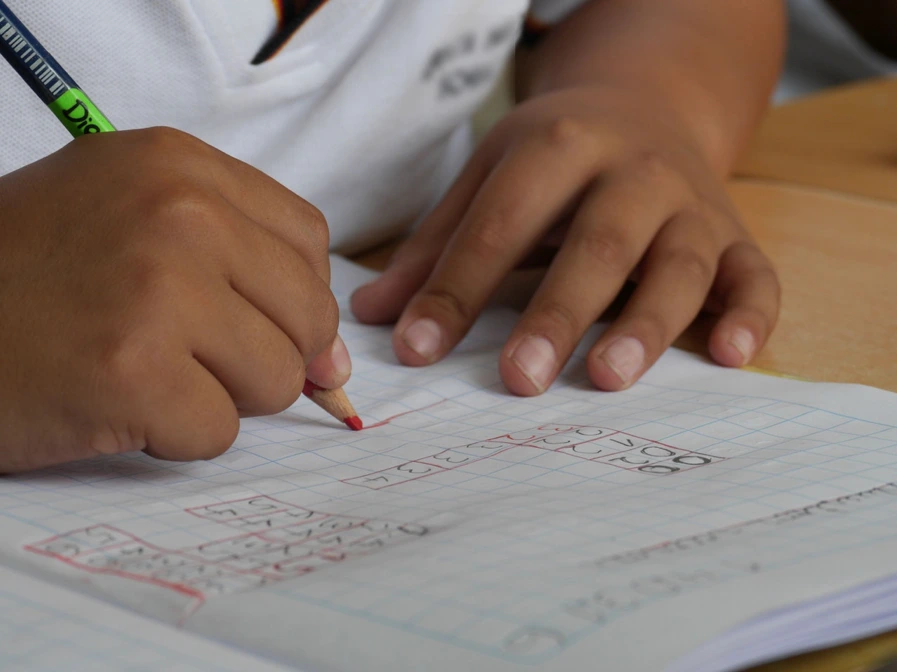
Whether you want your child to become an engineer or simply want to make sure they can file their own taxes, ensuring they develop the arithmetical and numeracy skills they need to function in the modern world is essential.
Math undergirds just about everything we do, from calculating how much of a tip to leave a restaurant server to baking a cake or planning the monthly budget, but competency in math is not to be taken for granted: according to MacLean’s, math scores have been steadily falling across Canada, even as the amount of time students spend in math classes has risen.
It is common for children, especially in elementary school, to struggle with math. Many students find it to be counter-intuitive, too abstract, or just plain boring, and many teachers are struggling with inadequate resources and an out-dated curriculum.
So how can you make sure that your children get the support they need to master vital skills like multiplication, division, fractions, and basic equations?
In this post, we’ll talk about how parents can play an active role in helping their kids develop their numeracy skills by anticipating common problems in math learning and addressing them proactively. Understanding the challenges your little one is about to face is a key part of making sure they have the resources they need to overcome them.
While it isn’t your job to teach math, there are things you can do to help the information they are learning in the classroom stick: this can mean that you hire a private math tutor but it can also involve harnessing digital tools to make math learning more comprehensible and fun, and just providing good, old fashioned moral support when they’re struggling.
Learning Fractions
Understanding fractions is just one of those things that most adults have understood for so long, they don’t even realize they had to learn it. But in fact, as many pedagogues have explained, fractions can be incredibly difficult for elementary students to learn.
But put yourself in the position of your child, who is just learning how the world works, and how the words we use to describe the world — like percent, integer, and fraction — relate to the concrete objects around them. How are they to understand that if you cut an orange in half, they have both half an orange, 0.5 of an orange, 50% of an orange, and ½ of an orange? And that if they cut that half in half, they have both half of a half of an orange, and also a quarter of an orange?
One of the joys of parenting is being confronted with the challenge of explaining all the things that you know and take for granted to your children. But in the case of something like fractions, which is an essential building block without which your kids will simply not be able to acquire new math skills, it can be a bit stressful.
That’s why it is important to take an active role in helping your kids learning fractions. Many of our Montreal math tutors have noticed that when parents make a point of engaging their kids about what they are learning in class at this crucial stage, students are more likely to learn and remember the material.
Fortunately, in the case of fractions, there are plenty of real-world applications you can use to help strengthen your child’s understanding.
For example, asking them to help you in the kitchen is a great way to teach the practical value of measurements, and to give them something concrete to think about when confronted with halves, quarters, and thirds. Or you can use coins and paper money to give them a chance to practice their math skills in a tactile way.
Mastering Multiplication
At a time when just about everyone is walking around with a high powered computer in their pocket, do we really need to learn multiplication tables?
This is a question most twenty-first-century math teachers have gotten time and time again. It can be hard to convince elementary students (and even their parents) of the point in learning how to do multiplication on paper given that most smartphones have easy-to-use calculator apps.
But there are two key reasons why learning how to do multiplication (and division) problems in elementary school without the use of a calculator is an essential part of the math curriculum.
First, as our math tutors in Ottawa will tell you, long-form multiplication and division for a foundation for a lot of what will come later. While a calculator app may be able to help you figure out the square footage of a room, it won’t be nearly as handy when it comes time to do advanced equations. Giving students a thorough understanding of how simple problems work makes it a lot easier for them to master harder problems down the road.
In fact, some researchers have argued that one of the reasons U.S. schoolchildren are outperformed in math by other education systems around the world is that the American curriculum does not provide the kind of deep grounding in basic skills that students need to excel at more complex kinds of arithmetic.
Second, it is never a good idea to rely too much on technology. If you can’t do basic addition, subtraction, or multiplication without whipping out your phone, you’re going to be at a huge disadvantage — especially once your battery dies!
For this reason, it is important to encourage your children to see the value in learning how to do the problems, rather than simply finding the solution. While getting the answer write on the test is the end goal, the only reason they’re being tested in the first place is to see whether they understand the process.
Making this kind of learning into a competitive game is one of the most effective ways of getting kids to learn. Drill them on their times tables while you’re driving around, and ask them to solve simple questions throughout the day (for example, if a recipe calls for 3 tablespoons of butter, and you’re tripling the recipe, how much butter do you need?).
Normalizing math, and making it a part of everyday life, is one of the most important things you can do to help your kids take it seriously and apply themselves to learning.
Connecting Learning to Real Life
The single greatest challenge an elementary math teacher faces, however, is in resisting the temptation to make the curriculum an end in itself. Young children are curious about the world, and are often obsessed with finding patterns, and the most successful educators are the ones who can harness that raw interest into math learning.
But teachers can’t make these connections on their own, and one of the most important roles a parent can play is in modelling an interest in the value of math. The human brain is designed to take pleasure in solving problems, which is one of the reasons we like games so much. Instead of thinking about math as a chore, find ways to connect it to their real-life experiences.
For example, finding something your child is already passionate about, and then drawing out the mathematical features, is a great way of helping your kids see that math touches everything. If they like to draw, you can find books and youtube videos to teach them about the importance of ratios, scaling, and angles. If they’re interested in sports, use the hockey rink, football field, or soccer pitch to show the importance of fractions.
These exercises won’t just make math more accessible, they will also emphasize its practical value — and perhaps more importantly, show them that a command of math can help them accomplish things in areas they already care about.
At Prep Academy Tutors, we have made it part of our mission to work with educators who are passionate about their subjects and who use modern pedagogical tools and methods to pass that passion on to their students.
If you are in Ontario, Quebec, or Alberta get in touch with us to find out more about our tutoring services — we even have math tutors in Calgary who can help your kids work with the local curriculum to engage elementary and secondary students in the joys and pleasures of math.
In an era of high technology, where new jobs are being created every year in engineering, programming, math, and science, equipping your children with the tools they need to master their math curriculum is one of the best ways to set them up for sustainable and rewarding careers.
Call Prep Academy Tutors today to find out how we can help your children develop a love of math.
3 Strategies for Beating Math Anxiety

As children settle into classroom routines, parents may notice that some subjects feel more difficult or worrying than others. Math-related worry is often described as math anxiety. Understanding how a child feels about math can be as useful as looking at their marks.
One of the most common reasons families reach out to us to find a math tutor in Toronto is because they have a child who is struggling in math. While it is normal for students to be challenged by new material — especially at the beginning of the school year — in some cases, the problem transcends the normal difficulties involved in mastering new concepts and formulae.
When a child becomes distressed by math, take their feelings seriously and ask which situations feel difficult. Understanding the academic task and the emotional response can help families and teachers choose appropriate support.
What is Math Anxiety?
Math anxiety is a widely observed phenomenon in which students develop negative emotional reactions to math and math-related tasks. This can manifest in a range of different ways: as a frustration with arithmetic and avoidance of tasks that require it, a general sense of tension, and even as bursts of anger and rage on the part of children suffering from this issue when confronted with math problems.
Math anxiety can make it harder to concentrate or encourage a student to avoid math tasks. Acknowledge these feelings without assuming that they reflect low ability or a lack of effort.
The three approaches below focus on listening to your child, making schoolwork manageable and building a supportive practice routine. They are suggestions for academic support, rather than a promise that any one approach will resolve anxiety.
A tutor in Toronto can help identify confusing concepts, explain material at the student’s pace and provide structured practice. Tutoring provides academic support; it should not be presented as treatment for an anxiety disorder.
Personalized tutoring can provide additional guidance as your child develops math skills and confidence. The right balance of support will depend on the individual student.
1. Understand the Problem
Start by asking what your child finds worrying: being timed, answering in front of classmates, making mistakes or a particular topic. In one study of secondary-school students in England, approximately 4% reported high anxiety about examinations and tests. This finding is not a prevalence estimate for math anxiety among all children.
Avoid dismissing a child’s concerns as laziness or immaturity. Listen to their explanation, talk with their teacher and look for situations in which the worry becomes more noticeable.
Focus on the next skill the student can practise, rather than treating current difficulties as a fixed limit on their ability. Encouragement is most useful when it is paired with explanations and tasks the child can understand.
Talk about the difficulty without blaming the student. Ask what makes a task feel stressful and agree on a manageable next step with the child and their teacher.
Our math tutors in Mississauga and other communities can help students work on specific learning needs. Begin by distinguishing gaps in understanding from the situations that make the student feel anxious.

2. Break Down the Material Into Manageable Pieces
Math anxiety does not only affect students who are falling behind. The University of Cambridge’s research also describes students with normal to high math achievement who experience anxiety. Ask where your child feels confident and where they would like more explanation.
Because new math concepts often build on earlier ones, gaps in understanding can make later lessons confusing. Reviewing an earlier concept can help a student make sense of the next step.
One practical approach is to revisit a concept the student already understands, then introduce a small next step. Work through an example together and give the student time to explain their thinking before adding more difficulty.
Families and teachers can coordinate this support around the student’s current schoolwork. Where additional help is useful, focus it on the concepts the student needs to understand rather than simply adding more questions.
Keep tasks manageable, allow questions and avoid making speed the main measure of success. Adjust the amount and difficulty of practice to the student’s understanding and response.
3. Practice Regularly
Choose short practice sessions with a clear purpose, such as working through one type of fraction problem or reviewing a method used in class. A predictable routine can help families make time for learning without turning every session into a test.
Start with a familiar example and build from there. If a task becomes overwhelming, pause, ask what is confusing and adjust the next step rather than insisting that the student push through unchanged.
Regular practice is one part of academic support, rather than a guaranteed solution to anxiety. The Tackling Maths Anxiety resources, developed with University of Exeter psychologists, discuss supportive learning relationships, a growth mindset and ways to respond to setbacks.
A local tutor can help organise this practice, explain difficult material and adapt lessons to the student’s needs. Discuss the format and pace that work for your child, including whether lessons at home would be a comfortable option.
Supporting a child with math involves understanding, confidence and problem-solving skills. Celebrate a useful question, a new strategy or a clearer explanation, as well as a correct answer.
Progress may be uneven. Keep expectations realistic and work with your child and their teacher to review what is helping and what needs to change.
If your child avoids practice altogether, our article on when children resist math work offers further ideas for parents.
If your child needs help understanding math, contact Prep Academy Tutors to discuss one-on-one academic support. Our tutors can work on learning priorities, explanations and practice without promising a particular outcome or treatment for anxiety.